Signal > Noise: September 2025
September 1, 2025
Good evening, everyone!
With another eventful month behind us, this month’s Signal > Noise is going to be presented in a slightly different format – a short webinar. We cover a lot of ground in under 20 minutes, and I’d love to hear your feedback on the conversation.
In this letter you’ll find:
Signal > Noise – Webinar Edition
Investment Essentials – Account Initialisms Primer
File Under “D’ for “Duh” – Bank Reps Conflicts of Interest
Signal > Noise – Webinar Edition
This month I had the opportunity to record a candid conversation between myself and fellow Portfolio Manager Mark Ting with the Vancouver FWP team.
This is an unrehearsed, open discussion covering some of today’s most pressing topics, including:
• Inflation and the impact of new tariffs
• The direction of global liquidity
• Where interest rates may head next
• Risks that could potentially bring markets down
• And, of course, where the stock market might be headed from here
What makes this conversation especially valuable is that it’s not a scripted consensus view. You’ll hear two seasoned professionals share their sometimes conflicting perspectives on the markets — which we think is both refreshing and thought-provoking.
We believe you’ll find this short session both engaging and insightful.
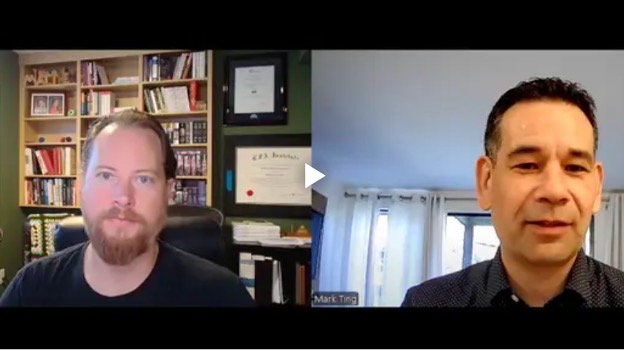
To view the webinar please click here.
If you’d like to discuss how these themes may affect your portfolio, please don’t hesitate to reach out to me directly.
Investment Essentials – Account Initialisms Primer
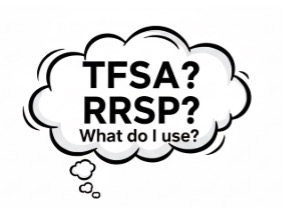
With all of the initialisms we Canadians have for investment account options, it’s easy to confuse account types and how or when they’re used. Please find a PDF attached to help you enhance your investment knowledge!
File Under “D’ for “Duh” – Bank Reps’ Conflicts of Interest
Every so often you see a headline that makes you think “they really had to research that?”, but, to crudely paraphrase Lord Kelvin, “if it ain’t measured, it ain’t science”.
Over the summer, Canadian regulators did a review of sales practices at the Big Five banks in Canada, with the byline: “Research “showed a statistically significant association” between sales pressure and recommendations not in client interests”.
“The Ontario Securities Commission (OSC) and the Canadian Investment Regulatory Organization (CIRO) published a report detailing the results of a voluntary, anonymous survey of almost 2,900 reps at the fund dealers affiliated with the Big Five banks — BMO, CIBC, RBC, Scotiabank and TD Bank — which found that many reps report that they feel pressure to sell, which can result in product and service recommendations that aren’t in clients’ interests.
In particular, regulators found that the use of scorecards to track reps’ sales and other activities are tools that, “not only increase pressure to meet sales targets, but also influence the products recommended to clients, posing a risk to the interests of retail investors.””
Other findings included “that 32% of reps reported that their compensation was driven more by sales volumes than by the quality of their advice to clients”, and “a third of reps say that clients have sometimes received incorrect information about those recommendations; and that 25% said that clients have sometimes received recommendations that aren’t in their interests.
Investor advocate groups have long been fighting for transparency for investors on important topics like relationship disclosures, determination of suitability, disclosure of fees, and accurate and consistent performance reporting. In 2026, reporting disclosure standards will be enhanced again with the roll-out of Phase 3 of the Client Relationship Model (CRM3), with the goal of more clearly showing investors fees from all sources, and their “all in costs” of investing.
However, enhanced disclosures don’t prevent bad sales practices, so here are three tips investors can use to better protect themselves when obtaining financial advice.
1) Is Your Advisor Independent?
If your advisor works directly for a fund company or bank fund dealer, asking what products are available on their “product shelf” can give you a good idea of if anything other then their own company’s funds are available. This can vary within the firm. A “Financial Planner” working at a bank’s retail branch may only be able to sell you the bank’s own line of mutual funds and ETFs, whereas an “Investment Advisor” working at the bank’s brokerage branch may have an open product shelf.
2) Is Your Advisor Accredited?
The alphabet soup of accreditations can be confusing and intimidating, and while most designations that grant post-nominal letters show a deeper level of knowledge and understanding, they are not all equal. Further, while the most rigorous designations require a commitment to fiduciary principles, they do not automatically mean your advisor is a fiduciary.
In Canada, advisors that hold the CFA Institute’s Chartered Financial Analyst (CFA), FP Canada’s Certified Financial Planner (CFP®), Canadian Securities Institute’s Chartered Investment Manager (CIM®), or (after an upcoming update in 2026) the IAFP’s Registered Financial Planner (RFP) designations all have agreed to uphold a fiduciary standard. However, that does not mean those advisors actually have a fiduciary responsibility to you…just that they could lose their accreditation if they do not act “as if”.
3) Does Your Advisor have Fiduciary Responsibility?
In simplest terms, fiduciary responsibility is a legal responsibility to act in the best interests of another party. These include corporate directors and officers (to their shareholders), Trustees (to the beneficiaries of a Trust), Attorneys (to their clients), and certain Financial Advisors.
In Canada, the quickest way to check if your Advisor is a fiduciary is whether or not you have a discretionary relationship. A discretionary manager (usually a Portfolio Manager or Associate Portfolio Manager) has the ability to make investment decisions and implement changes on your behalf. They will use your Investment Policy Statement (IPS) document to outline your goals, important personal information and investment considerations, and include specific “guardrails” on asset allocation allowances. The IPS is a legal document and codifies the Portfolio Manager’s fiduciary duty to act in your best interest.
As a discretionary Portfolio Manager holding the CFA, CFP®, and CIM® designations, I have a fiduciary responsibility to always act in my clients' best interests. If you’re not sure about your current financial advisor’s responsibilities to you, please feel free to reach out to me directly.
That’s all for this month! As we continue into the fall, I’ll be addressing some year-end tips and planning preparation over the next few letters that you can take care of now, in order to keep the upcoming tax season as painless as possible
All my best,
Matthew
Disclaimers:
Foundation Wealth Partners LP is registered as a Portfolio Manager and Exempt Market Dealer across Canada.
This information is provided for illustrative and discussion purposes only. This material is not intended as a formal research report and should not be relied upon as a basis for making an investment decision. Historical trends do not imply, forecast or guarantee future results. Information is as of the date indicated and subject to change without notice. Nothing herein constitutes a prediction or projection of future events or future market behavior.
We are not tax advisors. Please speak to your accountant for more information.